One of one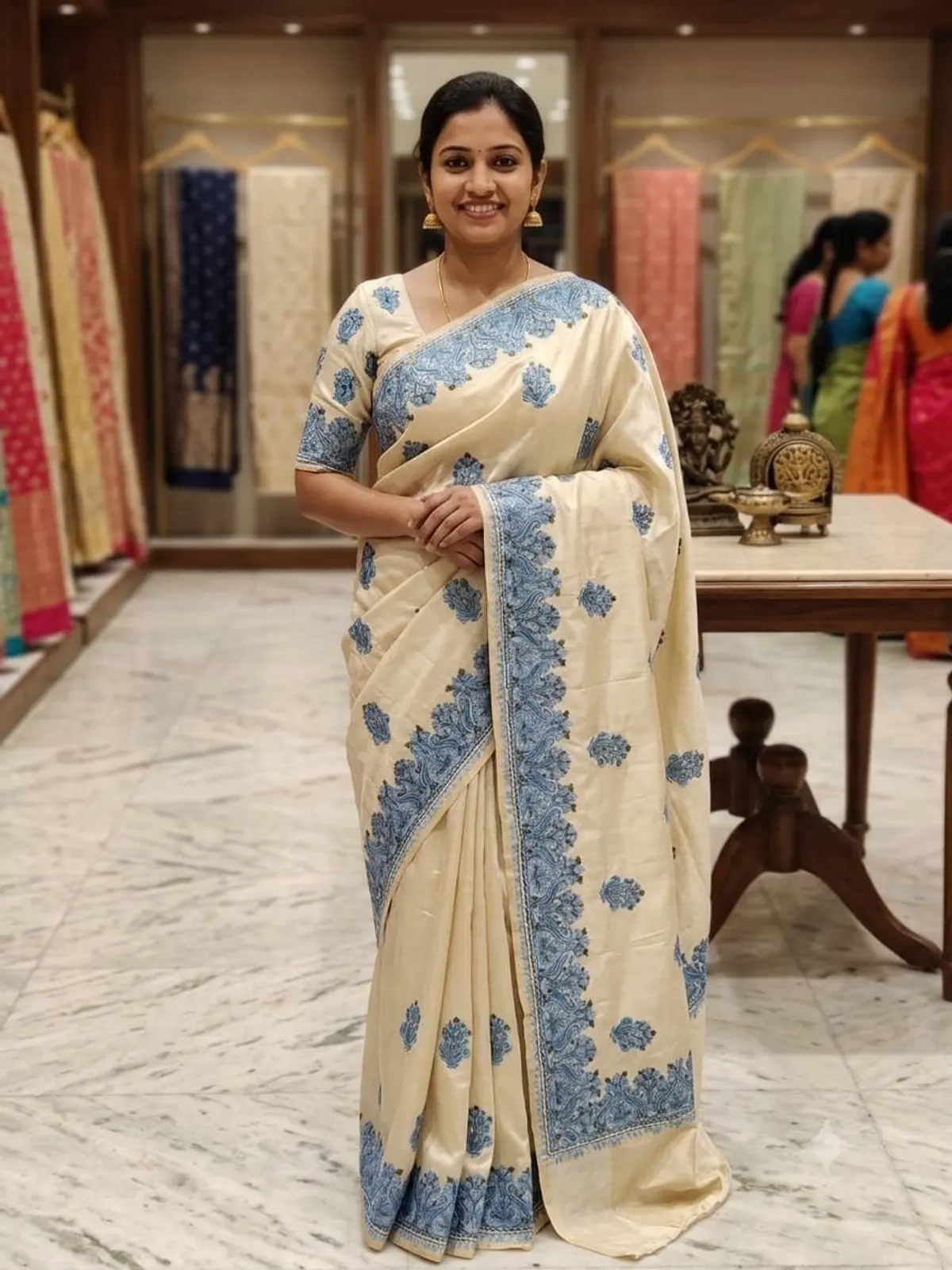
Fine needle embroidery worked in floss silk, stitch by stitch.
2 pieces
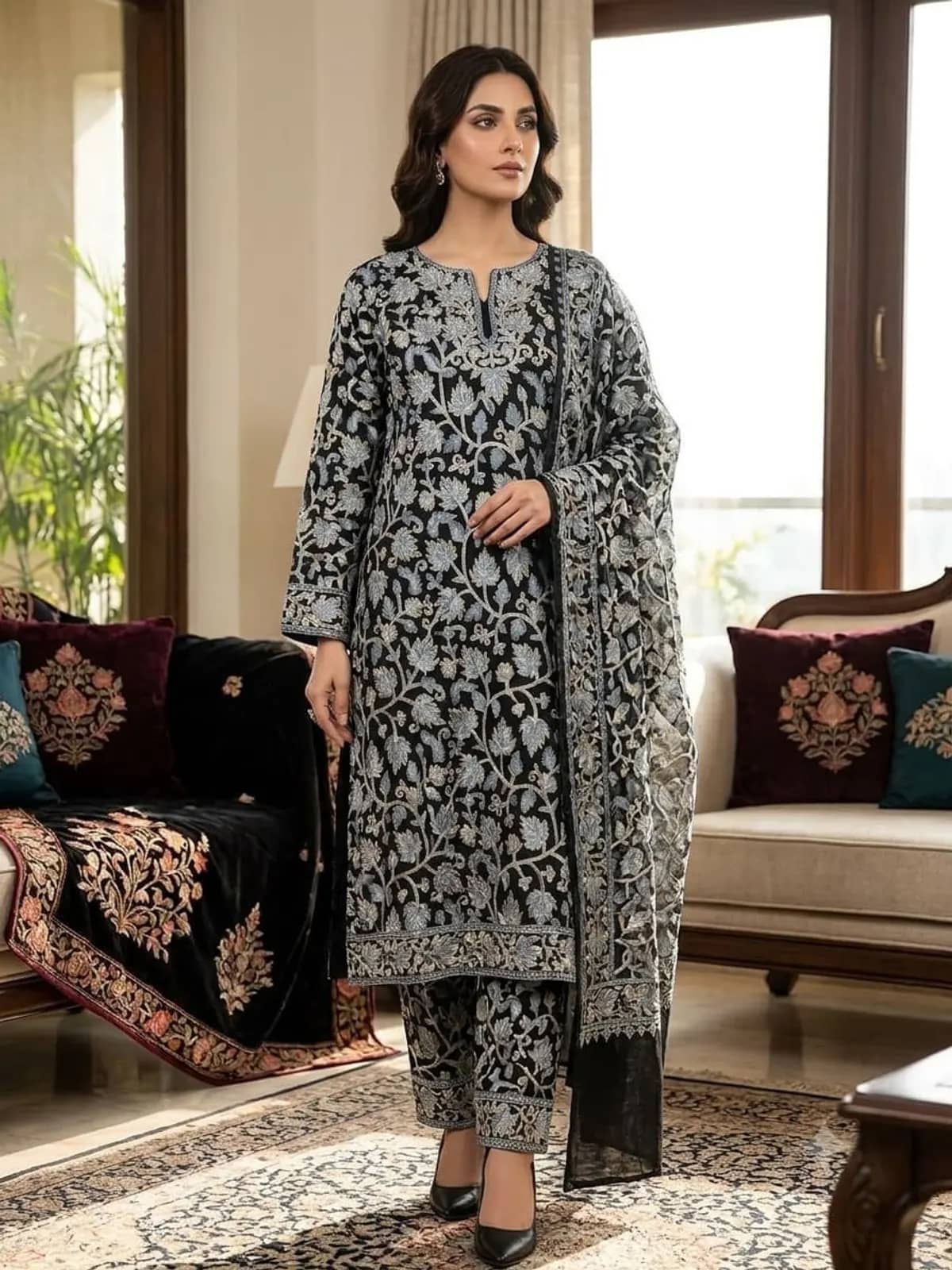
Sozni is needle embroidery worked with a very fine needle and untwisted floss silk, most often onto pashmina. The defining quality is restraint of scale: the stitch is small enough that it sinks into the ground weave rather than sitting on top of it, so the surface stays soft and the pattern reads almost as though it were woven in.
The most demanding sozni is do-rukha — worked so that both faces of the cloth are finished, with no reverse. There is no way to shortcut it. The embroiderer works the design twice, in register, often in different colourways on each side, and any error shows on one face or the other.
Because sozni is worked stitch by stitch across a field rather than repeated from a stencil, coverage is what drives time and price. A border-only shawl is a matter of months; a full-field jaal, where the embroidery covers the entire ground, can occupy one person for the better part of a year.
Pashmina itself is a separate question from the embroidery on it. The fibre comes from the undercoat of the Changthangi goat, and it is graded by micron count before it is ever spun.